Context
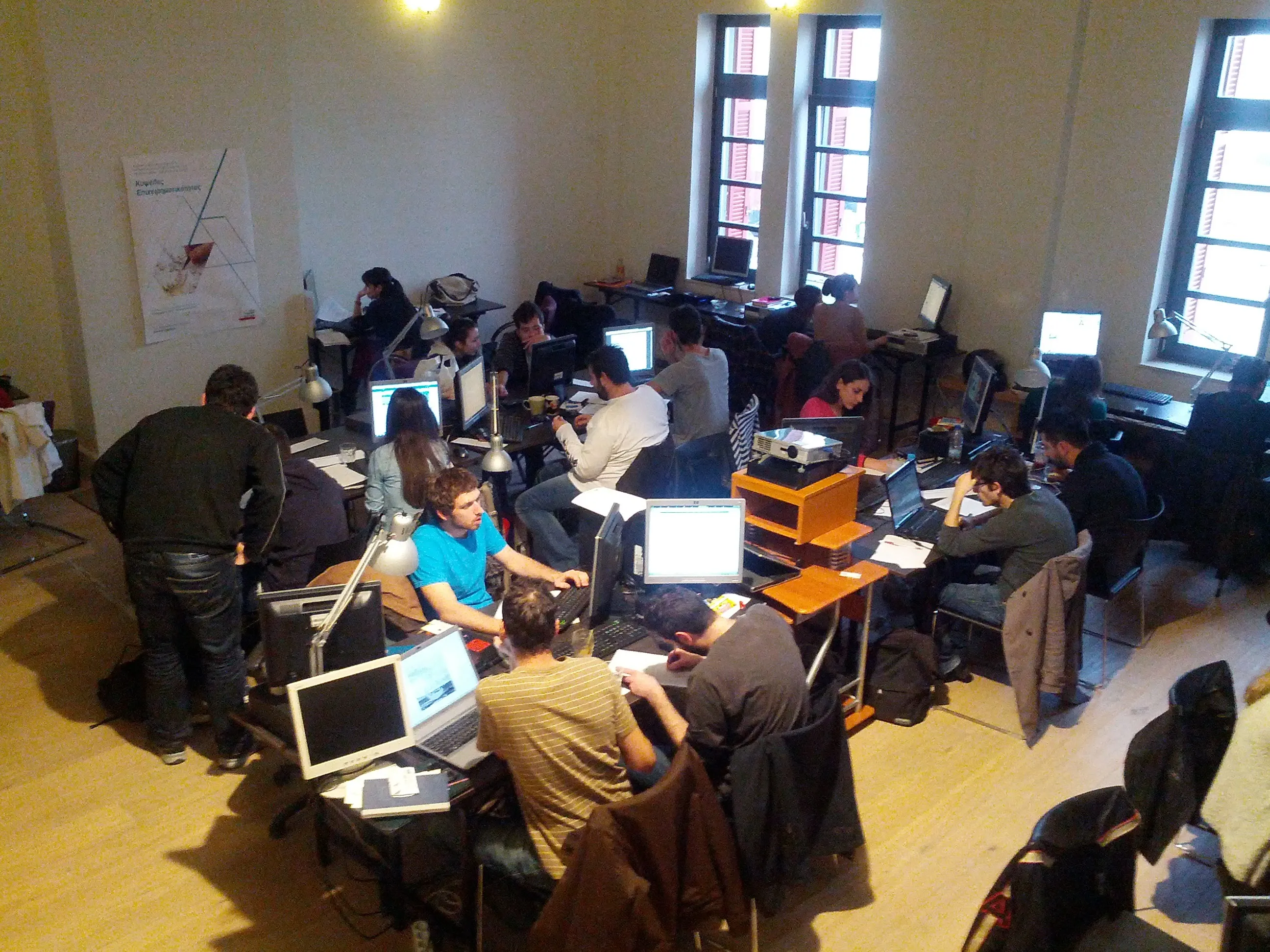
It’s 2013 and the startup ecosystem in Greece is still forming. New initiatives are emerging from both public and private organizations with the goal of helping young founders develop entrepreneurial skills and turn ideas into companies. At the time, my team was building an early-stage hardware startup called Sociallgreen. During the pilot phase of one of the first government-backed incubation initiatives, four members of our team participated in the program from February to June 2013. During those four months we delivered the first prototype of our product and incorporated the company under Sociallgreen P.C. It was an intense period that taught us a lot about both product development and the realities of early startup ecosystems.
Looking back, a few lessons stayed with me.
Startups need market exposure
Startups exist to solve real problems in specific markets. While academic knowledge and research can be valuable, early-stage teams benefit much more from exposure to real users, market feedback, and examples from companies already operating in the space. For founders, understanding the problem environment is often more important than refining the theoretical aspects of the solution.
Not all feedback is equal
Feedback is extremely valuable for startups, but its quality matters. The most useful feedback usually comes from people who understand both the market and the stage of the startup. Mentors and program managers with practical experience can help teams avoid common mistakes and challenge assumptions early in the process.
Hardware moves differently than software
One of the biggest lessons for us was how different hardware development is compared to software. Software startups can iterate quickly. Hardware startups operate on longer development cycles and prototypes can be expensive to build. In our case we built a full-dimension prototype early in the process. In retrospect, a smaller or simplified version might have allowed us to test assumptions faster and iterate more efficiently.
Incubation cannot happen in isolation
Another observation was that incubatiors shouldn’t operate in isolation. For startups to progress, they need constant interaction with the broader ecosystem: potential customers, partners, investors, and other founders. Without that exposure it becomes easy for teams to spend months refining ideas without validating them in the real world.
Early ecosystems require collaboration
When a startup ecosystem is still developing, collaboration between institutions becomes critical. Government organizations, private initiatives, and founders all play a role in creating an environment where early-stage companies can experiment and grow. Programs alone cannot create successful startups, but they can help founders take their first steps. Looking back, the incubator helped our team move forward at an important stage. It forced us to structure our work, deliver some more prototype versions, and think more seriously about the path from idea to product. More importantly, it was one of my first exposures to how startup ecosystems function and how early-stage teams navigate them.
A few conclusions
Looking back, the experience clarified a few things for me about early-stage ecosystems. Incubators and startups work best when they operate as partners rather than separate entities. Founders need to choose programs that match the stage of their company, and incubators need to select teams that can realistically benefit from the support they provide. Continuous feedback, exposure to the market, and interaction with the broader ecosystem are far more valuable than simply spending months inside an incubation environment.
Epilogue
For our team, the program helped us take an important step forward. It forced us to structure our work, deliver a prototype, and think more seriously about the path from idea to product. Looking back today, it was one of my first real exposures to how startup ecosystems function and how early-stage teams navigate them.