Context
In 2013 our team was building Sociallgreen, an early-stage hardware startup focused on recycling technology. At the time we were participating in one of the first entrepreneurship incubation initiatives in Greece and working on a prototype of our system. That summer I came across a conference I had never heard of before: Web Summit. The idea of presenting our startup outside Greece seemed ambitious for such an early-stage team, but we decided to apply anyway. To our surprise, we were accepted to exhibit in the Alpha startup program.
Preparing for the event
The months leading up to the event were intense. Our goal was to build a portable version of the prototype that we could demonstrate live during the conference.
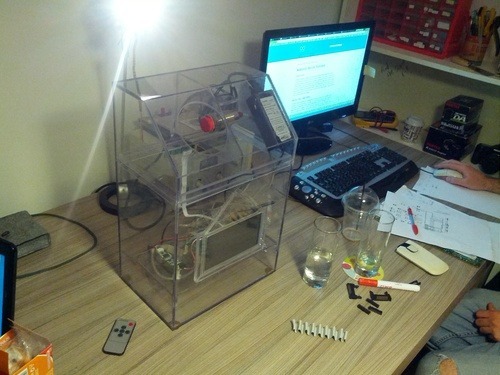
Hardware development rarely goes exactly as planned, but we managed to assemble a working version of the system just days before departure. The prototype was designed to be small enough to travel as cabin luggage so that we could carry it with us to the event. Like many early-stage founders, we were operating with very limited resources. Travel costs were covered through a mix of personal funds and family support, which ultimately made the trip possible.
The experience
Attending Web Summit was my first international technology conference. The scale was significantly larger than anything we had experienced before: thousands of founders, investors, journalists, and companies from all over the world.
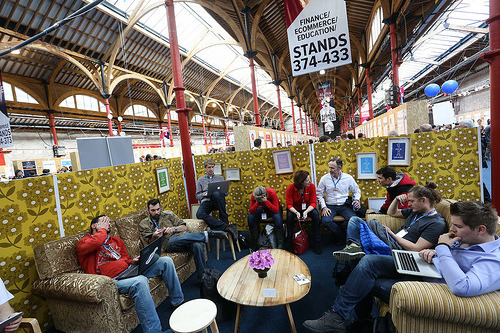
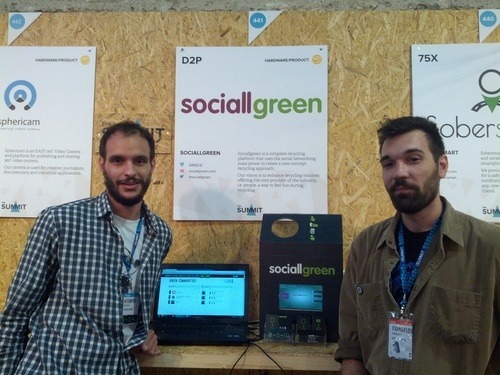
During the event we presented Sociallgreen at our stand and demonstrated the prototype to visitors from different countries. We also met other startups, attended talks, and held several meetings that had been scheduled in advance.
The feedback we received was generally positive. At the time, however, one of the challenges was understanding how much of that feedback represented genuine interest and how much was simply the natural optimism that exists in large startup conferences.
What happened afterwards
After returning from the event we followed up with the contacts we had made. Like many founders attending large conferences for the first time, we came back with a large number of business cards and potential leads. In practice, only a small number of those conversations continued after the event. One meaningful outcome was a partnership with a development agency that helped us build our iOS application. Six months later, however, the startup itself had shut down, which meant that most of the opportunities created during the event were never fully explored.
Lessons about conferences
Looking back, the experience taught me an important lesson about large technology conferences. Events like Web Summit offer access to an enormous number of people and organizations. That scale can be valuable, but it can also make it easy to lose focus if founders attend without a clear plan.
In my experience, the real value comes when startups arrive with:
- scheduled meetings
- a clear objective for each conversation
- a shortlist of people or companies they want to connect with
Without that preparation, it is easy to spend several days networking without generating concrete outcomes. For early-stage startups operating with limited resources, the cost of tickets, travel, and preparation time should always be weighed carefully against alternative uses of that effort. Even so, the experience was an important milestone. It was the first time we presented our work to an international audience and saw how our idea was perceived outside our local ecosystem.